Find the fault, not just the symptom
Systematic fault-finding on motors, controllers, sensors and wiring, so repairs target the real cause.
Tell us the fault codes, noises or cut-outs you have noticed, and we will explain how we trace the cause.
✓
Fault Codes Read
✓
Motor Sensors Tested
✓
Controller Testing and Repair
About Fault Finding
Electric motorbike diagnostics start with a simple idea: measure before you replace. When a bike stutters, cuts out or throws a fault, we trace the problem through the motor, controller, sensors and wiring so you pay to fix the actual cause.

When your bike reports a problem through dash symbols, flashing lights or stored controller codes, we connect compatible diagnostic tools where the bike allows it and read what the controller has logged. We treat error codes as a starting clue rather than a final answer, since one code can have several possible causes.
We then confirm the clue with live measurements: supply voltage, throttle signal, phase output and sensor feedback. A code that points at the motor sometimes turns out to be a loose connector, and our testing shows which, so you pay for the right fix.

On the motor side we check winding resistance, insulation, bearing condition, magnet and rotor health and the Hall sensors that tell the controller where the rotor is. If your hub motor gives a rough start, a rattle on load, a burning smell or sudden loss of drive, each symptom points us to a different test.
Mid-drive and hub designs fail in different ways, so before any electrical work starts we inspect the housing, cable entry and axle area for water, heat marks and wear, and we tell you what we see. Tell us when the fault started and what the bike was doing.
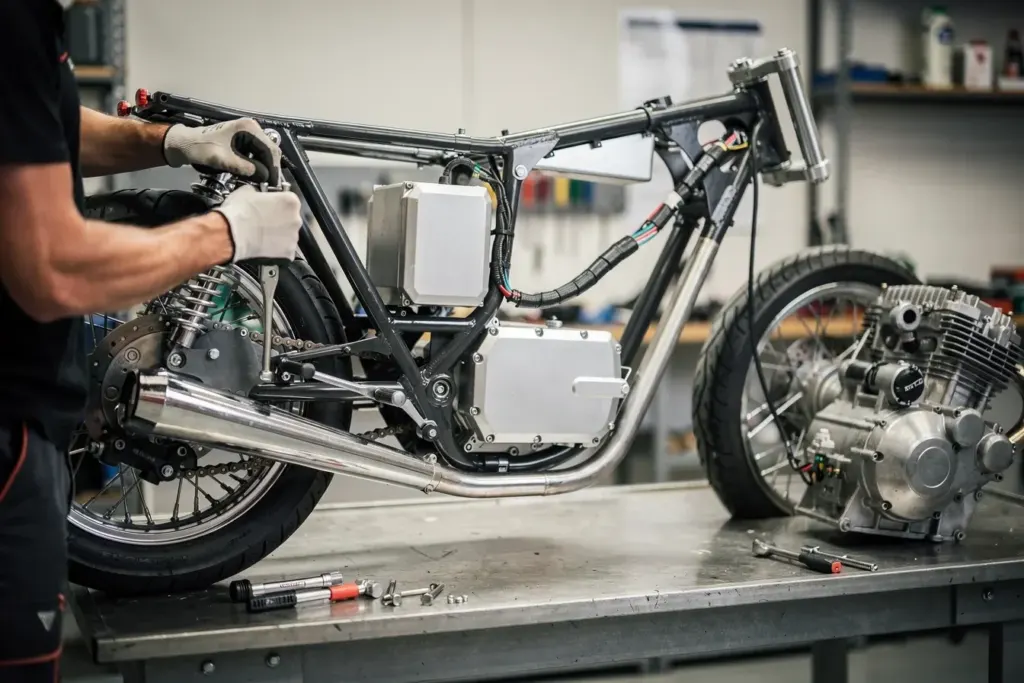
The controller is the bike's brain and power stage. We check its power output, temperature behaviour, throttle input and communications, and look inside the case where appropriate for burnt tracks, swollen capacitors or water ingress. Controller repair is sometimes possible, and sometimes replacement is the sensible option; we tell you which.
Controllers are also affected by what surrounds them, such as a poor ground, a damaged loom or a failing battery management system, so we check those supply-side items instead of condemning the controller outright, and we explain each finding to you.
Diagnosis Path
01
You describe the symptom, when it occurs and whether any codes or lights appear.
02
We do a visual check of the wiring, connectors, case seals and charge state.
03
We read any stored codes and test supply, throttle, sensor and motor signals.
04
We isolate the faulty part and confirm the finding with a second test.
05
You get a clear explanation, repair options and a recommendation before work proceeds.

Why Diagnose First
You get a definite answer from us: which part has failed, what evidence shows it and what the repair involves, so you can decide with real information rather than a parts-swapping gamble. Book the bike in at our Melbourne workshop and we will start with the fault you describe.
If the issue is minor, such as a corroded plug or a sensor lead, we tell you that too. Fixing the cause properly means the fault does not return a week later and leave you stranded on the trail or at the kerb.
Fault Questions
They indicate which circuit the controller noticed a problem in, such as throttle, motor sensor or low voltage. The code narrows the search, but it does not name the broken part, so testing is still needed.
Yes, frequently. Chafed insulation, loose pins and corroded plugs create intermittent faults that mimic a failed motor or controller, which is why connectors are checked before any expensive component is condemned.
Yes, those are among the common bikes riders bring in. Details vary between models and years, so call with your bike's make, model and symptoms and we will discuss what testing applies.
Diagnosis Findings
01
Which part is at fault and the evidence behind it, from measured readings to visible damage, written without jargon.
02
Whether the part can be repaired, adjusted or needs replacing, with the practical trade-offs of each so you can choose.
03
Simple steps to avoid a repeat, such as sealing connectors, rerouting a loom or changing how the bike is washed and stored.
Diagnostics FAQ
Describe the fault and when it started, and we will test the motor, controller and wiring to find what has actually failed.